
-
Products
- ADHD
- Alzheimer's
- Anti-anxiety & Antidepressants
- Anti-biotics
- Anti-cancer
- Anti-fungal
- Anti-parasitic
- Antiallergic
- Antiviral
- Ayurvedic Healing
- Corticosteroids
- Eye Care
- Gastrointestinal
- Hair Health
- Heart Health
- Hormone Therapy
- Migraine
- Nutraceutical
- Others
- Pain Management
- Sexual Wellness
- Skin Wellness
- Sleep Disorder
- Steroids
- Thyroid Treatment
- Weight Management
-
Products
- ADHD
- Alzheimer's
- Anti-anxiety & Antidepressants
- Anti-biotics
- Anti-cancer
- Anti-fungal
- Anti-parasitic
- Antiallergic
- Antiviral
- Ayurvedic Healing
- Corticosteroids
- Eye Care
- Gastrointestinal
- Hair Health
- Heart Health
- Hormone Therapy
- Migraine
- Nutraceutical
- Others
- Pain Management
- Sexual Wellness
- Skin Wellness
- Sleep Disorder
- Steroids
- Thyroid Treatment
- Weight Management
Generic vs. Branded Drugs: What’s the Difference and How to Choose Wisely
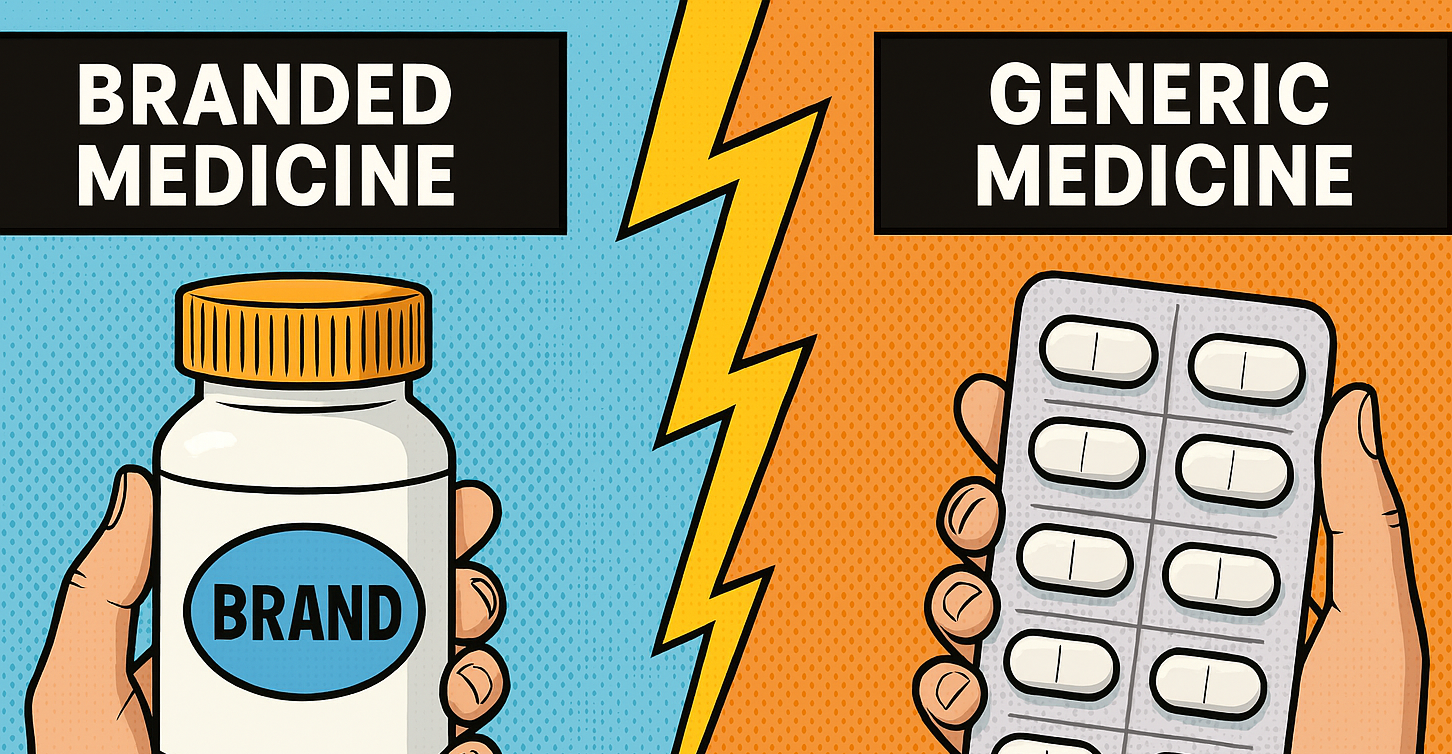
Discover the key differences between generic and branded drugs. Learn how to choose wisely, save on healthcare costs, and ensure safe, effective treatment with trusted medicines.
Introduction:
When prescribed a medication, patients often face a choice between branded drugs and their generic counterparts. While both aim to treat the same condition, misconceptions about quality, safety, and effectiveness can make the decision confusing. Understanding the differences helps patients make informed, cost-effective choices without compromising on health.
What Are Branded Drugs?
Branded drugs are developed and marketed by pharmaceutical companies under a trade name. They are backed by extensive research, clinical trials, and marketing campaigns. Because of the costs involved in innovation, development, and brand recognition, branded drugs are usually more expensive. For example, Lipitor is a branded version of atorvastatin.
What Are Generic Drugs?
Generic drugs contain the same active ingredient as branded drugs. They are approved by regulatory authorities only after proving bioequivalence, meaning they have the same absorption, strength, dosage form, and efficacy. Generics are typically less expensive because they bypass the initial research and marketing costs. For instance, Atorvastatin is the generic equivalent of Lipitor.
Key Differences
The most important distinction lies in cost. Branded drugs are priced higher due to the expenses of research, development, and marketing, while generics are more affordable and widely accessible once patents expire. In terms of active ingredients, both are identical, ensuring the same therapeutic effect. Regulatory standards apply equally to both, so quality and safety are not compromised in generics. The differences are often cosmetic—packaging, logos, colors, and pill shapes may vary, but these do not affect efficacy. Availability also plays a role: branded drugs are limited until patent protection ends, after which generics flood the market, making treatment more accessible.
Common Misconceptions
- Generics are less effective.
False. Regulatory agencies require generics to demonstrate the same therapeutic effect as branded drugs.
- Generics are unsafe.
False. Both undergo rigorous quality checks before approval.
- Branded drugs are always superior.
Not necessarily. The difference lies in branding and marketing, not medical efficacy.
How to Choose Wisely
Consult Your Doctor or Pharmacist – Always seek professional advice before switching.
Check Regulatory Approval – Ensure the generic is approved by trusted authorities (FDA, CDSCO, EMA).
Compare Costs – Generics can save patients significant money without compromising treatment.
Consider Availability – Generics are often more accessible, especially in regions with limited healthcare budgets.
Trust Reputable Sources – Purchase medicines only from licensed pharmacies or verified online platforms.
Conclusion
Both branded and generic drugs serve the same purpose: improving health. The choice often comes down to cost, accessibility, and trust in the source. By understanding the facts and consulting healthcare professionals, patients can confidently select the option that best suits their medical and financial needs.



- Home
- About Us
- Shipping Policy
- Our Products
- ADHD
- Alzheimer's
- Anti-anxiety & Antidepressants
- Anti-biotics
- Anti-cancer
- Anti-fungal
- Anti-parasitic
- Antiallergic
- Antiviral
- Ayurvedic Healing
- Corticosteroids
- Eye Care
- Gastrointestinal
- Hair Health
- Heart Health
- Hormone Therapy
- Migraine
- Nutraceutical
- Others
- Pain Management
- Sexual Wellness
- Skin Wellness
- Sleep Disorder
- Steroids
- Thyroid Treatment
- Weight Management
- Contact
- Download Brochure